AI Agent vs Hiring Customer Support: Which Saves More Money?
A data-driven cost comparison between deploying an AI agent and hiring full-time support agents. Includes salary benchmarks, cost-per-ticket analysis, and an honest look at when you still need humans.
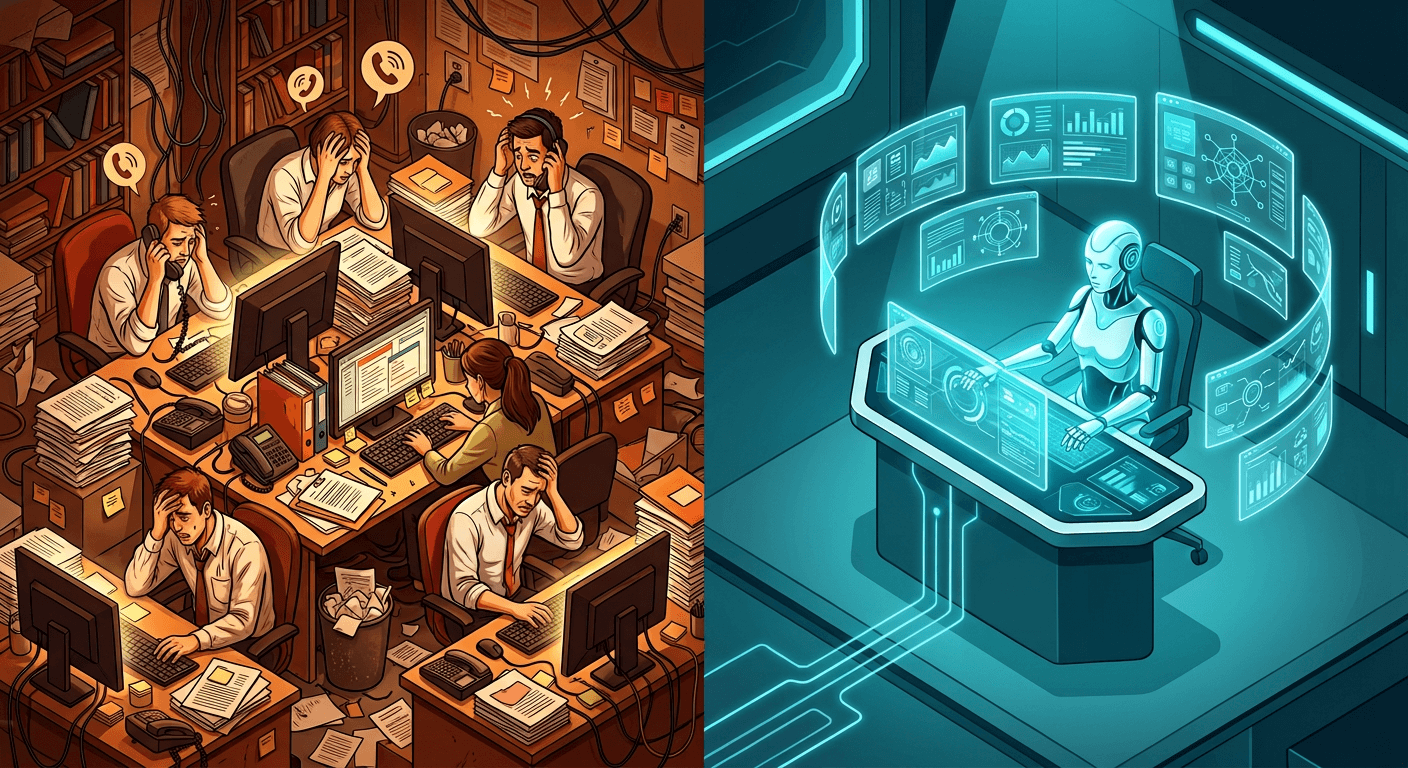
Hiring a customer support agent feels like the obvious move when your inbox is overflowing. But obvious does not always mean cost-effective. In 2026, AI chatbots handle 70-80% of routine customer inquiries at a fraction of the cost of a single employee. The question is no longer whether AI works for customer support — it is whether you can afford not to use it.
This article breaks down the real numbers. No vague promises, no inflated savings projections. We will compare hard costs — salaries, benefits, training, turnover — against AI chatbot pricing. We will calculate the cost per resolved ticket for each option. And we will be honest about where humans still outperform machines.
The True Cost of Hiring a Customer Support Agent
Most business owners underestimate the full cost of a support hire. The salary is just the starting point. In the United States, the average customer support representative earns between $35,000 and $45,000 per year. In Latin American markets — where many businesses outsource support — salaries range from $8,000 to $18,000 USD annually depending on the country and experience level. Brazil sits around $10,000-$15,000 USD for a bilingual agent. These numbers look manageable until you add everything else.
Salary Is Only the Beginning
- Base salary: $35,000-$45,000/year (US) or $8,000-$18,000/year (LATAM)
- Benefits and payroll taxes: Add 25-40% on top of base salary. Health insurance, retirement contributions, paid time off, and employer-side taxes push a $40,000 US salary to $50,000-$56,000 in total compensation
- Equipment and software: $2,000-$4,000 for a laptop, headset, CRM licenses, and helpdesk tools
- Training costs: 2-4 weeks of onboarding at zero productivity. Factor in the trainer's time too — that is another experienced agent not handling tickets
- Management overhead: A team lead or manager for every 8-12 agents, adding 10-15% in indirect cost per agent
- Office space or remote stipend: $3,000-$6,000/year per agent for physical space, or $1,200-$2,400/year for home office stipends
The loaded cost of a single US-based support agent is typically $55,000-$65,000 per year when you account for benefits, training, equipment, and overhead. In LATAM markets, the loaded cost runs $12,000-$25,000 USD annually.
The Turnover Problem Nobody Talks About
Customer support has one of the highest turnover rates of any profession. Industry data consistently shows annual turnover between 30% and 45%. That means for every three agents you hire, at least one will leave within 12 months. Each departure costs you 50-200% of the agent's annual salary when you factor in recruiting, interviewing, onboarding, and the productivity ramp-up period. A US-based agent who leaves after 8 months could represent a $25,000-$40,000 loss before their replacement is fully productive.
This is not a solvable problem through better management alone. Support work is repetitive, emotionally draining, and often thankless. The agents who stay tend to be the ones who get promoted out of the role — creating the same vacancy you started with.
What an AI Chatbot Actually Costs
AI chatbot platforms in 2026 typically charge between $25 and $299 per month depending on message volume, channels, and features. For most small and mid-size businesses, the $25-$100/month tier covers what they need: plan-based channel coverage, knowledge base training, and human handoff for complex cases.
Full Annual Cost Breakdown
- Platform subscription: $300-$1,200/year ($25-$100/month)
- Setup and configuration: $0-$500 one-time (many platforms include setup in the subscription)
- Knowledge base creation: 2-8 hours of your time to upload documents, FAQs, product info, and policies
- Ongoing optimization: 1-2 hours per month reviewing conversation logs and refining responses
- Scaling cost: Near zero. An AI chatbot handles 10 conversations or 10,000 conversations with the same subscription
- Downtime: Zero. No sick days, no vacations, no lunch breaks, no overnight gaps
Total annual cost for an AI chatbot: $348-$1,688 including setup and optimization time. Compare that to $55,000-$65,000 for a single US-based support agent. Even in LATAM markets, one agent costs 7-15x more than a chatbot subscription.
Cost Per Resolved Ticket: The Number That Matters
Raw annual costs tell part of the story. But the metric that separates smart operators from everyone else is cost per resolved ticket. This number captures efficiency — how much each successful customer interaction actually costs your business.
Human Agent Cost Per Ticket
A well-trained support agent handles approximately 40-60 tickets per day, or around 10,000-15,000 tickets per year (accounting for time off, meetings, breaks, and administrative tasks). At a loaded cost of $58,000/year (US average), that works out to $3.87-$5.80 per ticket. But that is the best-case scenario. Factor in escalations, callbacks, tickets that require research time, and the per-ticket cost climbs to $5-$15 depending on complexity. Industry benchmarks from HDI and MetricNet consistently place the average cost of a human-handled support ticket between $7 and $12.
AI Chatbot Cost Per Ticket
An AI chatbot at $49/month ($588/year) handling 2,000 conversations per month (24,000/year) achieves a cost per interaction of $0.02-$0.05. Even if we only count fully resolved tickets — conversations where the customer got their answer without human help — and assume a 60% full-resolution rate, the cost per resolved ticket is $0.04-$0.10. At higher volume or higher resolution rates, this number drops further. Conservative industry estimates place AI chatbot cost per resolved ticket at $0.10-$0.50, depending on platform and use case.
The math is stark: a human-handled ticket costs $5-$15. An AI-resolved ticket costs $0.10-$0.50. That is a 10x-150x cost difference per interaction.
Side-by-Side Comparison: AI Chatbot vs Human Agent
- Annual cost: AI chatbot $348-$1,188 vs Human agent $55,000-$65,000 (US) / $12,000-$25,000 (LATAM)
- Cost per resolved ticket: AI $0.10-$0.50 vs Human $5-$15
- Availability: AI 24/7/365 vs Human 8-10 hours/day, weekdays
- Response time: AI under 3 seconds vs Human 2-15 minutes average
- Simultaneous conversations: AI unlimited vs Human 2-4 at a time
- Language support: AI 50+ languages instantly vs Human 1-3 languages per agent
- Consistency: AI identical quality every time vs Human varies by mood, fatigue, and experience
- Training time: AI 2-8 hours of setup vs Human 2-4 weeks of onboarding
- Scaling: AI same cost at 10x volume vs Human hire another agent for every 10-15K tickets/year
- Turnover risk: AI zero vs Human 30-45% annual turnover
When Humans Still Win
Honesty matters more than a sale. AI chatbots are not a universal replacement for human support. There are situations where a human agent delivers better outcomes, and pretending otherwise would be dishonest. Here is where humans still have the edge.
Complex Empathy Situations
A customer whose order was damaged right before their daughter's birthday needs more than a refund policy recitation. They need someone who understands the emotional weight of the situation and can offer a genuine, creative solution. AI can detect sentiment and escalate, but it cannot truly empathize. For complaints involving emotional distress, personal loss, or frustration that has been building over multiple interactions, a skilled human agent produces better outcomes and higher retention.
High-Value and VIP Clients
Your top 5% of clients — the ones generating 30-50% of your revenue — deserve human attention. These relationships are built on trust, familiarity, and the feeling of being valued. A VIP client who spends $50,000/year with your business should not have to explain their situation to a chatbot. Route these clients directly to a dedicated account manager or senior agent.
Multi-Step Problem Resolution
Some tickets require investigating across multiple systems, coordinating with other departments, making judgment calls about exceptions to policy, or negotiating custom solutions. A billing dispute that involves checking payment processor logs, warehouse shipping records, and CRM notes simultaneously is better handled by a human who can exercise judgment. AI chatbots handle these cases best by gathering initial information and then routing to the right specialist with full context.
Regulatory and Legal Scenarios
Healthcare, financial services, and legal industries have compliance requirements that demand human oversight. An AI chatbot can handle appointment scheduling and FAQ responses in a medical clinic, but it should never provide medical advice or handle insurance disputes autonomously. The liability risk is too high and the regulatory framework is not yet adapted to AI-only interactions in these domains.
The Hybrid Model: Best of Both Worlds
The smartest businesses in 2026 are not choosing between AI and humans. They are building hybrid support systems where AI handles the volume and humans handle the exceptions. This model delivers the cost savings of automation with the relationship quality of human support.
How the Hybrid Model Works in Practice
- Tier 1 — AI handles all first-contact interactions: FAQs, order status, booking confirmations, store hours, pricing questions, product information, and basic troubleshooting. This covers 70-80% of all incoming inquiries
- Tier 2 — AI-assisted human agents: For cases the AI cannot fully resolve, it gathers information (order number, issue description, customer history) and routes to a human with full context. The agent starts the conversation already informed, cutting handle time by 30-50%
- Tier 3 — Dedicated specialists: Complex complaints, VIP clients, and regulatory matters go directly to senior staff. AI flags these based on customer value, sentiment analysis, or keyword triggers
A typical business running a hybrid model needs 60-80% fewer human agents than a fully manual operation. If you currently have 5 support agents, a hybrid model could reduce that to 1-2 agents handling only escalated and high-value interactions.
Real-World Savings: A Practical Example
Consider a mid-size e-commerce business receiving 3,000 support tickets per month. With a fully human team, they need 3-4 agents to handle that volume during business hours (no overnight coverage). Let us run the numbers for US-based operations.
Scenario A: All-Human Support
- 3 full-time agents at $58,000 loaded cost each: $174,000/year
- 1 team lead (part-time oversight): $25,000/year allocated
- Helpdesk software (3 seats): $3,600/year
- Turnover replacement (1 agent per year): $15,000 in recruiting and training
- Total annual cost: $217,600
- Coverage: Business hours only, Monday-Friday. Weekends and nights go unanswered
- Cost per ticket: $6.05 (36,000 tickets/year)
Scenario B: Hybrid AI + Human
- AI agent platform ($50/month): $600/year
- 1 full-time agent for escalations at $58,000 loaded cost: $58,000/year
- Helpdesk software (1 seat): $1,200/year
- Total annual cost: $60,268
- Coverage: 24/7/365. AI handles nights, weekends, and holidays automatically
- Cost per ticket: $1.67 (36,000 tickets/year, with 75% resolved by AI)
- Annual savings vs all-human: $157,452 (72% reduction)
The hybrid model saves $157,452 per year while providing better coverage. The business goes from no overnight support to 24/7 instant responses. Customer satisfaction typically increases because the majority of inquiries — checking order status, asking about return policies, confirming business hours — get answered in seconds instead of hours.
For LATAM Markets: The Numbers Still Favor AI
Even with lower labor costs in Latin America, the economics favor a hybrid approach. Three agents in Brazil at $14,000 loaded cost each ($42,000/year) plus overhead ($8,000) totals around $50,000/year with business-hours-only coverage. A hybrid model with one agent ($14,000) plus an AI chatbot ($948/year) runs $14,948/year — a 70% savings while adding 24/7 coverage. The chatbot also handles Spanish, Portuguese, and English simultaneously, eliminating the need for multilingual hiring.
Beyond Cost: Other Benefits of AI-First Support
- Data and insights: Every conversation is logged and searchable. Spot trending issues, product defects, and common questions automatically. Human agents rarely document conversations with the same consistency
- Instant scaling: Black Friday traffic spike? Product launch? AI handles the surge without hiring temporary staff or burning out your team
- Consistency: The AI gives the same accurate answer at 3 AM on a Sunday as it does at 10 AM on a Tuesday. No bad days, no miscommunication, no forgotten policy updates
- Faster iteration: Update your knowledge base and every future conversation reflects the change instantly. Retraining a human team on new policies takes days or weeks
- Employee satisfaction: Your remaining human agents handle interesting, challenging work instead of answering 'what are your hours?' for the 50th time today. This reduces burnout and turnover in your human team
Common Objections (Addressed Honestly)
"My customers want to talk to a real person"
Some do. Most do not — they want their problem solved fast. Research from Salesforce shows 69% of consumers prefer chatbots for quick communication with brands. The key is making human escalation easy and seamless. When a customer wants a human, they should get one within minutes, not be trapped in a chatbot loop. A well-built hybrid model satisfies both preferences.
"AI chatbots give wrong answers"
Poorly configured ones do. A chatbot trained on your actual business data — your menu, your policies, your product catalog — answers accurately because it is pulling from verified information, not making things up. Modern AI platforms also let you set guardrails: if the chatbot is not confident in an answer, it escalates to a human instead of guessing. The error rate for a well-configured AI chatbot is typically 2-5%, compared to 5-15% for human agents (who misremember policies, give outdated information, or make typos).
"We tried a chatbot before and it was terrible"
The chatbot landscape has changed dramatically. Rule-based bots from 2020-2023 were frustrating because they could only follow pre-programmed scripts. Modern AI chatbots powered by large language models understand natural language, handle follow-up questions, and maintain context across a conversation. The technology gap between a 2022 chatbot and a 2026 AI assistant is comparable to the gap between a flip phone and a smartphone.
How to Decide: A Simple Framework
Use this decision framework based on your monthly ticket volume and complexity mix.
- Under 500 tickets/month with mostly simple questions: AI-only is likely sufficient. Cost: $29-$49/month. Add human escalation via email for edge cases
- 500-5,000 tickets/month with mixed complexity: Hybrid model. AI handles Tier 1, 1-2 human agents handle escalations. Cost: $1,500-$7,000/month total
- 5,000+ tickets/month or regulated industry: Hybrid model with a larger human team. AI handles 60-70% of volume, specialized agents handle the rest. Cost reduction of 40-60% versus all-human
- Any volume with VIP/enterprise clients: Always maintain a human point of contact for your highest-value relationships, regardless of ticket volume
The Bottom Line
An AI chatbot is not a replacement for human judgment, empathy, or relationship-building. It is a replacement for the 70-80% of support work that does not require those qualities — the repetitive, predictable, high-volume questions that burn out your team and drain your budget. The businesses winning in 2026 use AI to handle the volume so their human team can focus on the interactions that actually build loyalty and drive revenue.
The cost comparison is not close. At $0.10-$0.50 per resolved ticket versus $5-$15 for human-handled tickets, AI chatbots deliver 10x-150x better cost efficiency on routine inquiries. Combined with 24/7 availability, instant response times, and zero turnover, the ROI case is overwhelming — even for businesses in lower-cost markets.
“We kept two agents for complex cases and let the AI handle everything else. Support costs dropped 68%, response times dropped from 4 hours to 8 seconds, and our CSAT score actually went up 12 points because customers stopped waiting.”
See the cost difference for your business. Deploy an AI chatbot on WhatsApp, Instagram, web chat, and Telegram — starting at $29/month with no per-message fees.
Start Your Free TrialNext step
Turn this research into a deployment plan
If this post matches a workflow you want to automate, the next buyer questions are usually pricing, competitive fit, onboarding details, and whether Eaxy already maps to your industry.
Buyer resources
FAQ for buyers
Review setup, handoff, channels, and deployment answers before you talk to sales.
Security overview
Check isolation, encryption, and trust details for buyer due diligence.
AI receptionist pricing
Understand what changes cost before you choose Starter, Pro, or Business.
WhatsApp automation pricing
Compare WhatsApp chatbot cost drivers, setup requirements, and managed deployment scope.
More from the Blog
How to Measure the ROI of Your AI Agent: The Complete Metrics Framework
Most businesses do not track AI agent performance properly. This framework covers cost-per-conversation, conversion lift, response time savings, and the 7 metrics that actually matter.
AI Agent vs Virtual Assistant: Which Saves More Money for Small Businesses?
Compare the real cost of hiring a virtual assistant ($500-2,000/mo) versus deploying an AI agent ($25-100/mo). See which handles more volume, works 24/7, and delivers better ROI.
AI Agent Pricing Models Explained: Per Task, Subscription, or Custom Enterprise Plans
Understanding how AI agent pricing works: per-task vs subscription vs enterprise models. Includes hidden costs, volume discounts, and how to evaluate ROI for each pricing structure.